Why a Mini-Factory
SCOPE
The Mini-Factory is state-of-the-art IIOT production facility, used to manufacture diverse products. The SUPSI Mini-Factory is meant for applied research and teaching. It aims to study and apply modern and advanced production technologies and methods in the context of Industry 4.0. The aim of the Mini-Factory is to create a platform where researchers, students and industries meet, develop and empower the transfer of knowledge. They have the chance to experience both classical automation topics (PLC, MES and SCADA programming, precision axes control and pneumatics), as well as advanced technologies, typical of the most advanced smart-factories (IoT, vision systems, simulation and digital twin, advanced measuring methods and smart production management systems).
OBJECTIVES
- To provide hands-on education. The Mini Factory is used in many courses for practical training of students by carrying out exercises and simulations in the laboratory, thus gain valuable practical experience with state-of-the-art equipment in the field of industry 4.0 and automation.
- To test and implement new automation techs. The Mini Factory serves as show cases of new technologies and methods, that can be tested and evaluated by researchers and companies alike.
- To develop and validate RTD approaches. The Mini-Factory serves as concrete test-bed for innovative approaches for I4.0 implementation. The factory functions as a pilot plant for research and applied industrial projects, on the top of which applications and technologies are developed, tested and integrated. Industrial requirements are taken up directly and transferred into the application-oriented research.
SPS Lab
The mini-Factory 4.0 is operated by the SPS Lab
AUTOMATION and COLLABORATIVE ROBOTS
Cell design, system integration, programming; Applications: assembly, polishing, welding and finishing machines.
HUMAN-CENTRED PRODUCTION SYSTEMS
Human-robot interaction, safety, worker well-being.
SUSTAINABILITY IMPACT
Real-time data-driven sustainability assessment; Comparison of sustainability performances of alternative production scenarios; Digital twin exploitation for sustainability-related decision making; Product digital passport for lifecycle-long green data collection
Our technologies
Our Factory implements a flexible production and assembly process capable to dynamically respond to customized orders, while still operating to stock, and demonstrates a significant amount of adaptability and resilience. Here the hardware and software components empowering the process
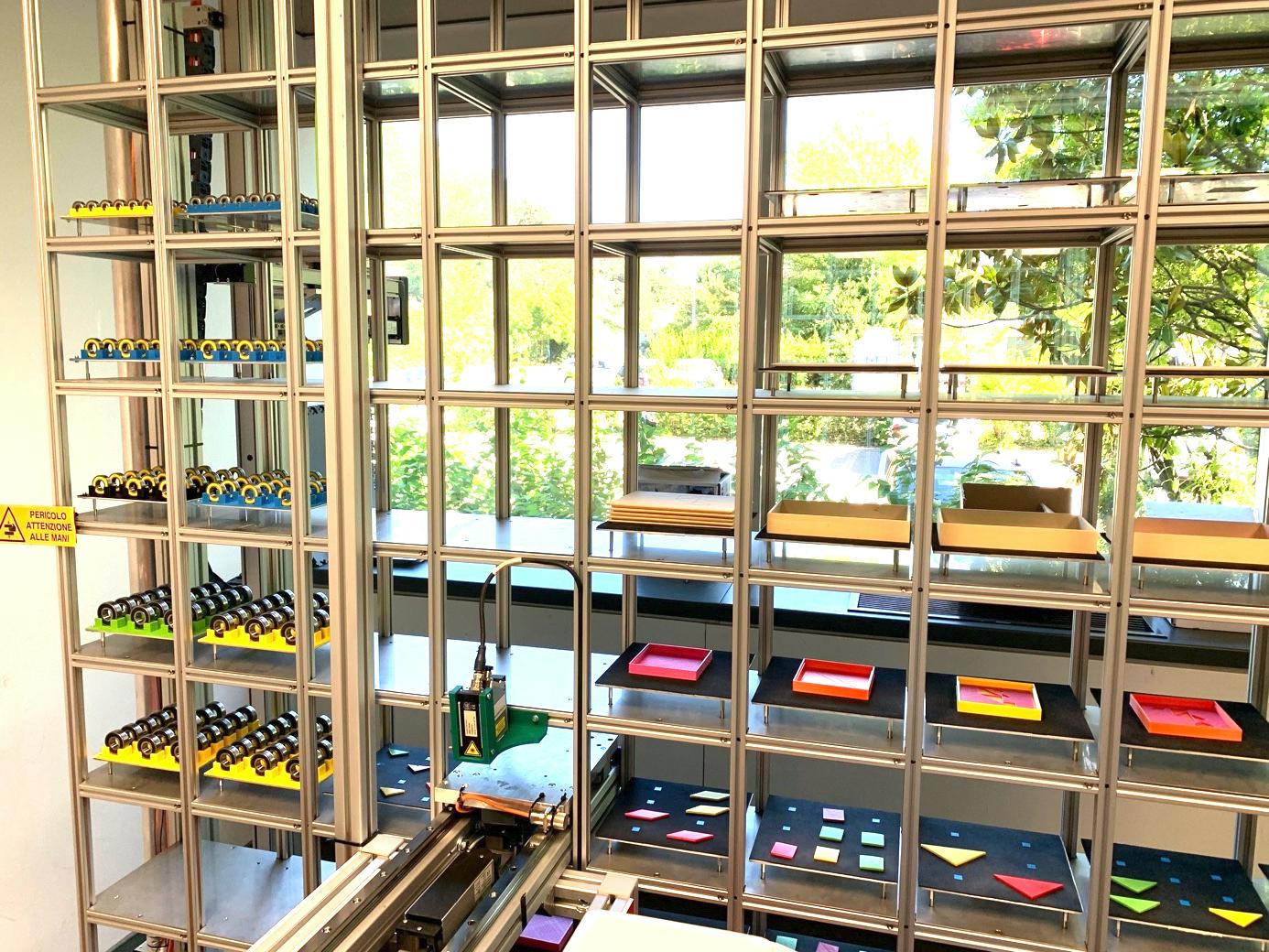
Vertical warehouse
Bosch-Rexroth profiles feature a grid of 81 slots, each one capable to host a pallet. A central slot acts as gate for loading/unloading and is linked with the rest of the transportation backbone.
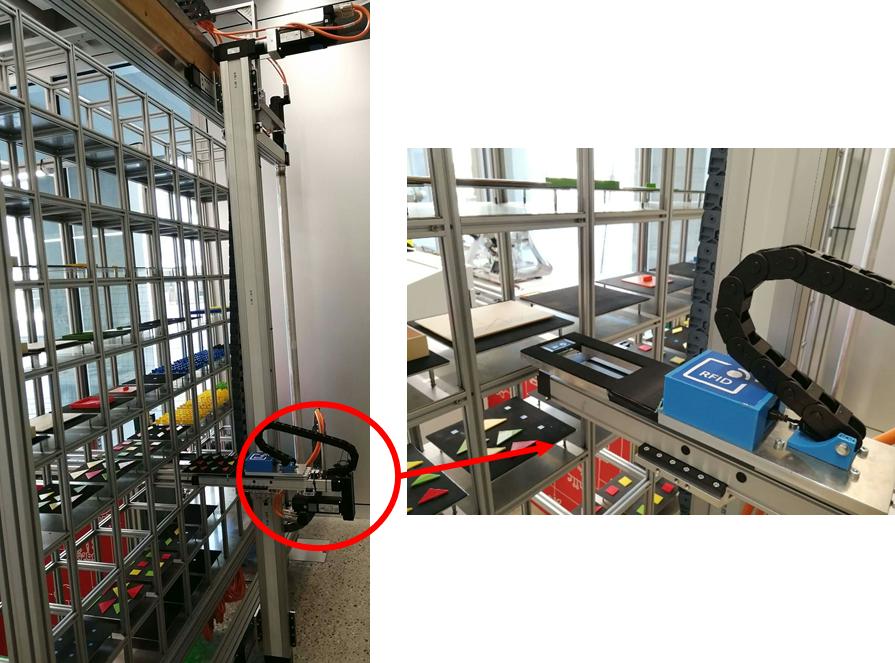
Three-axis Cartesian robot
Bosch-Rexroth IndraDrive Cs motion control and MSK040C/MSK040C Rexroth 3-Phase Synchronous Permanent Magnet Servo Motor. it interfaces and retrieves the pallets, where the components are stored on.
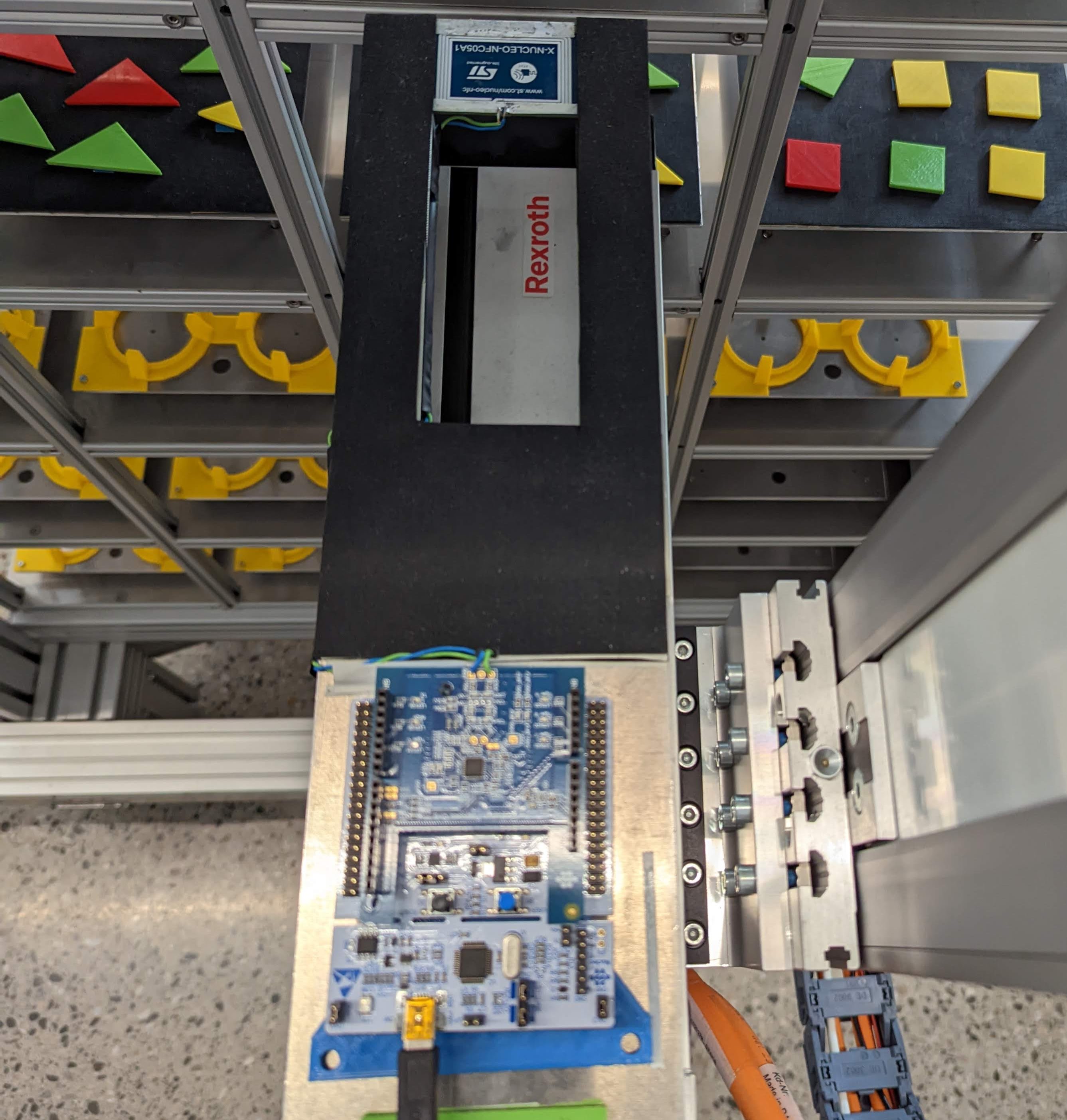
RFID system
X-NUCLEO-NFC05A mounted on the cartesian robot and it’s meant to check the warehouse consistency against the nominal status. NFC tags are placed on each of the pallets in use in the Mini Factory.
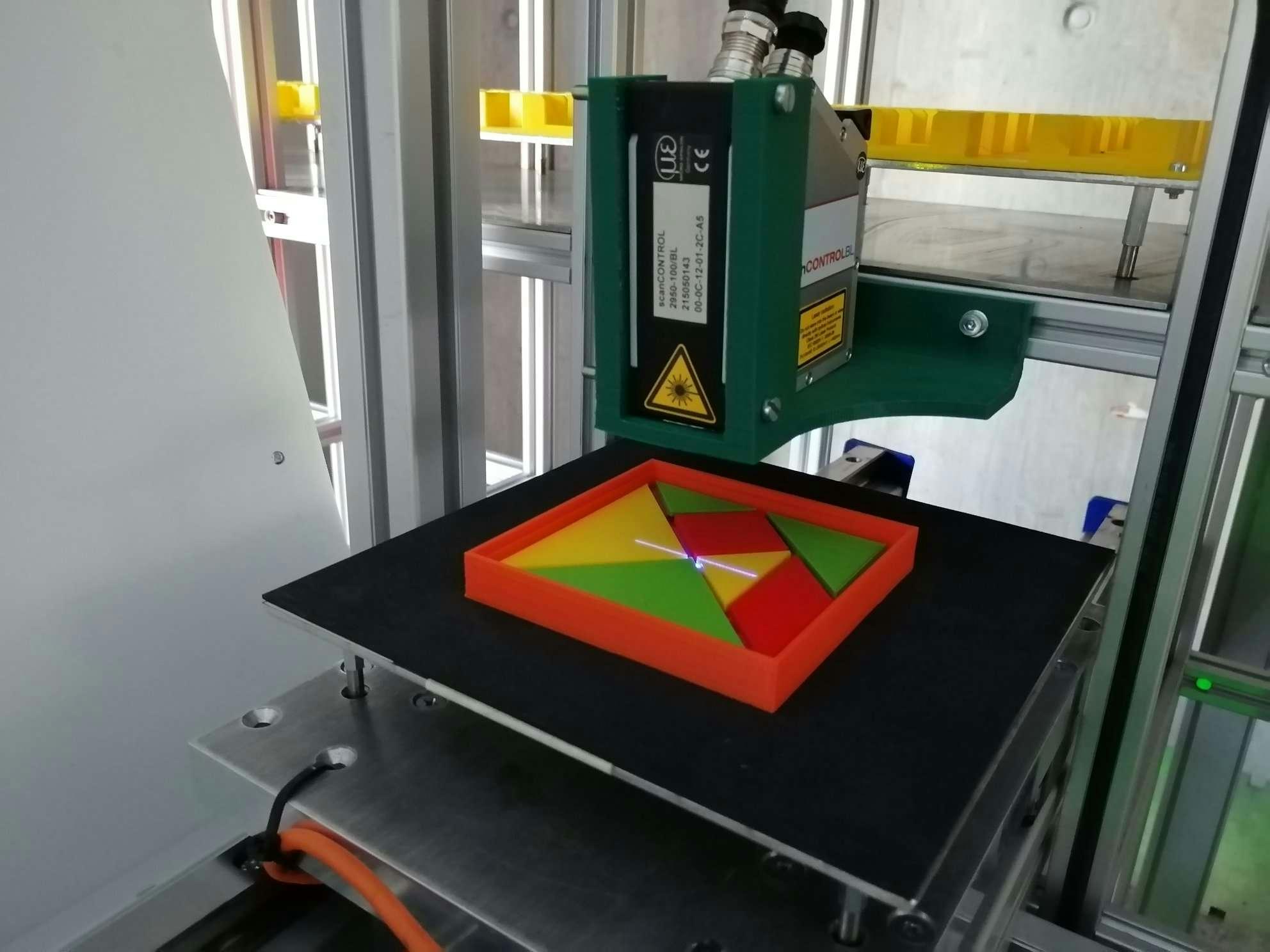
Laser triangulation sensor
Micro-epsilon scanCONTROL 2950 coupled with an optical linear encoder (Rexroth, IMS2A-KWD-020-SNS) in order to verify the geometrical features of the produced workpieces.
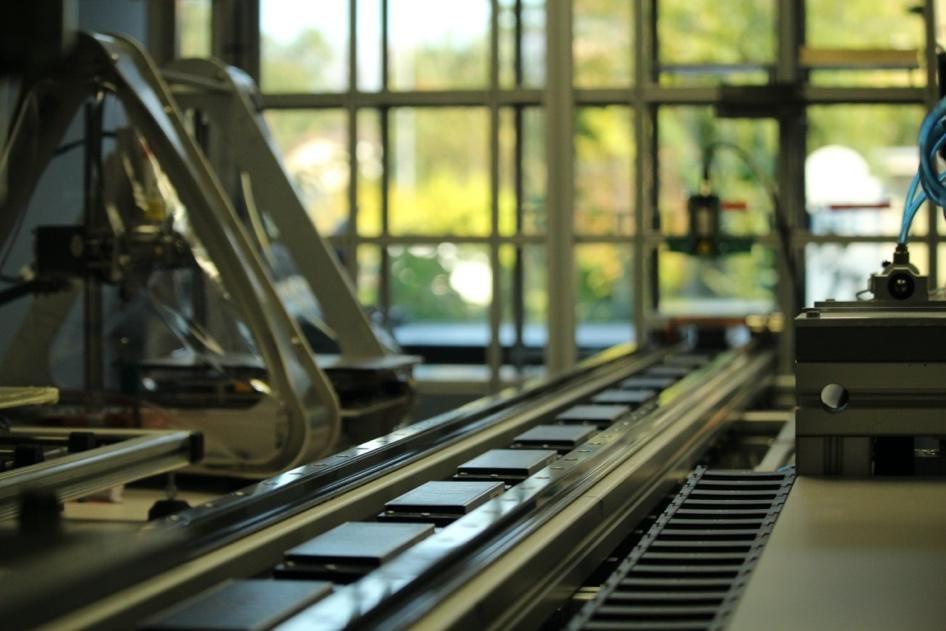
Transportation system
Bosch-Rexroth NYCe 4000 motion control, TECNOTION TM6Z linear motor. Two independent carriages based on a linear motor system. The first can enter the warehouse, while the second transports the SCARA robot along the line.
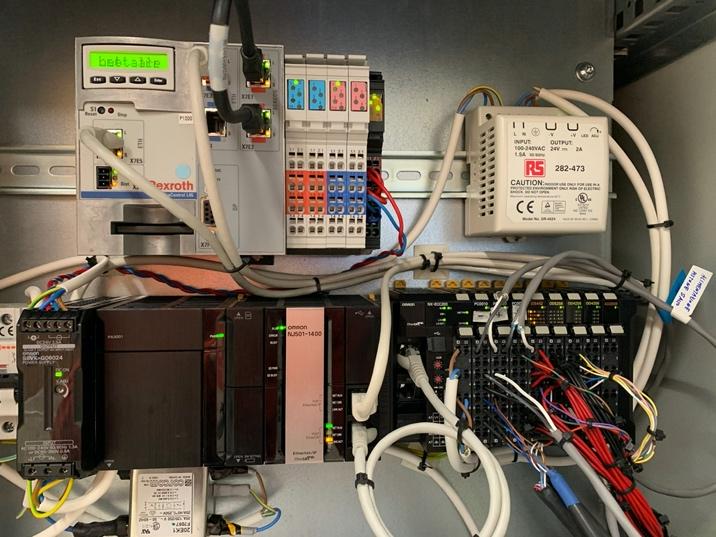
Control station with PLCs
Omron NJ501-1400 and HMI Omron NA5. Those are meant to provide logic control and supervise all the different factory components.
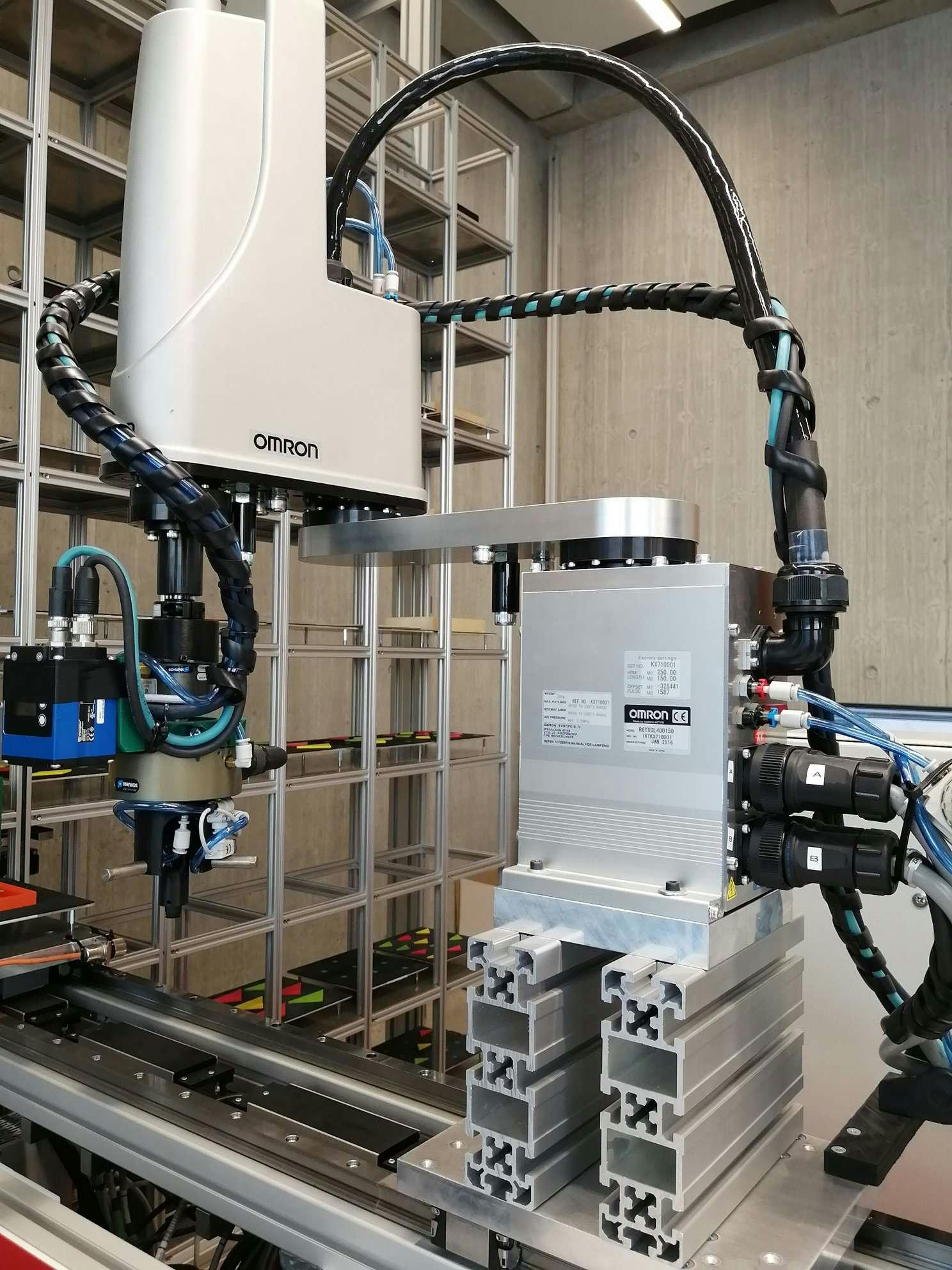
4-axes SCARA robot
Omron-Yamaha R6 XGL 400150. It is used for all the pick & place operations. The robot can automatically mount different tools depending on the needs. A smart camera (Wenglor Weqube B50S103) is mounted on the robot end effector. The camera empowers smart interaction with the surrounding environment.
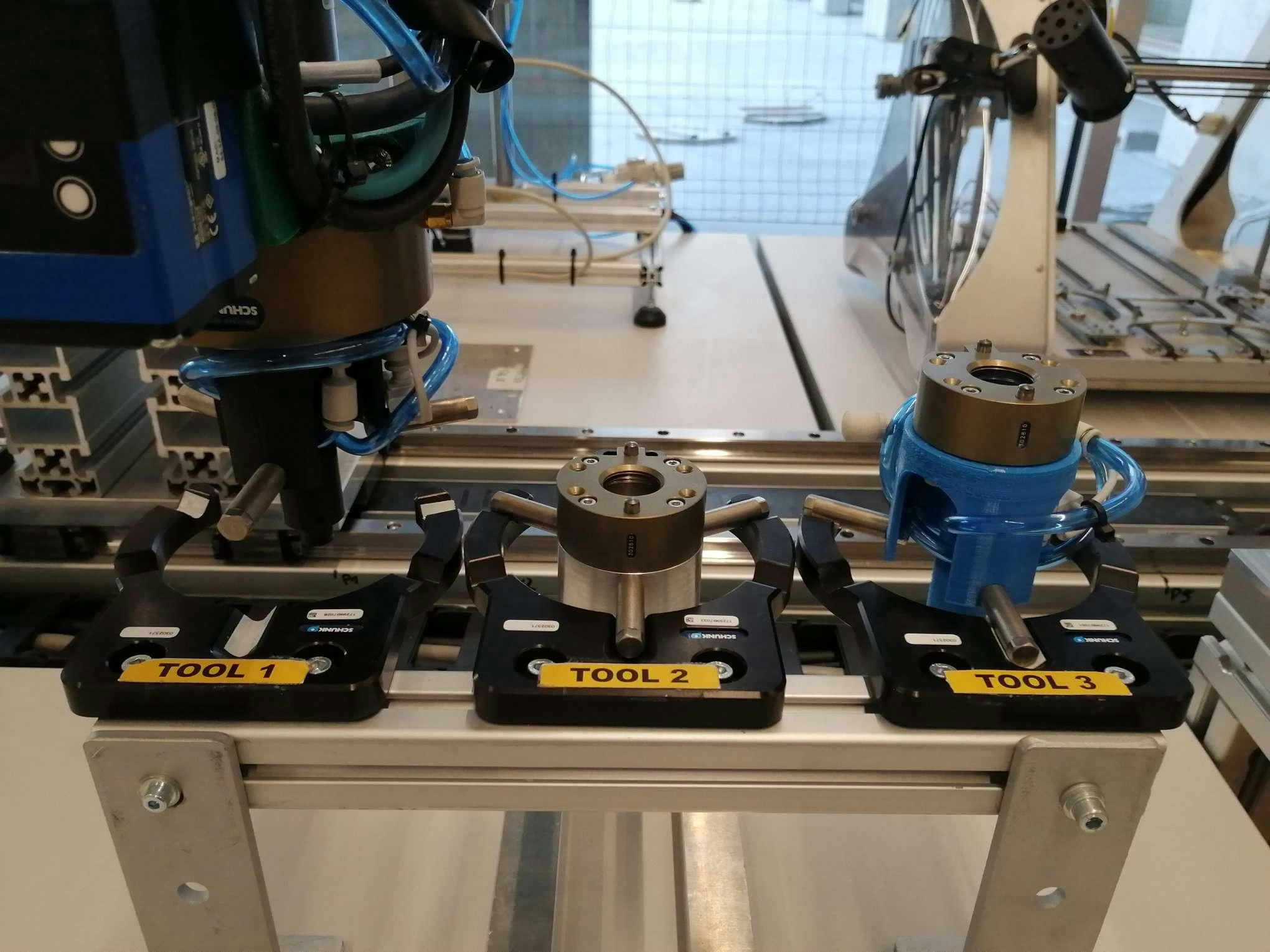
Automatic tool change
A set of different tool-heads for the SCARA robot is coupled with an automatic tool change interface (SCHUNK SWS), which allow the robot to interface with pallets, work-pieces and workstations.
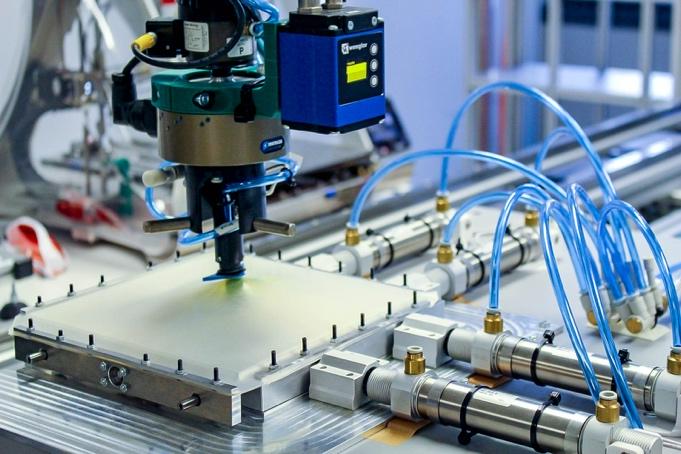
Detachment station
A dedicated station allows the automatic detachment of 3D printed pieces from the printing bed.
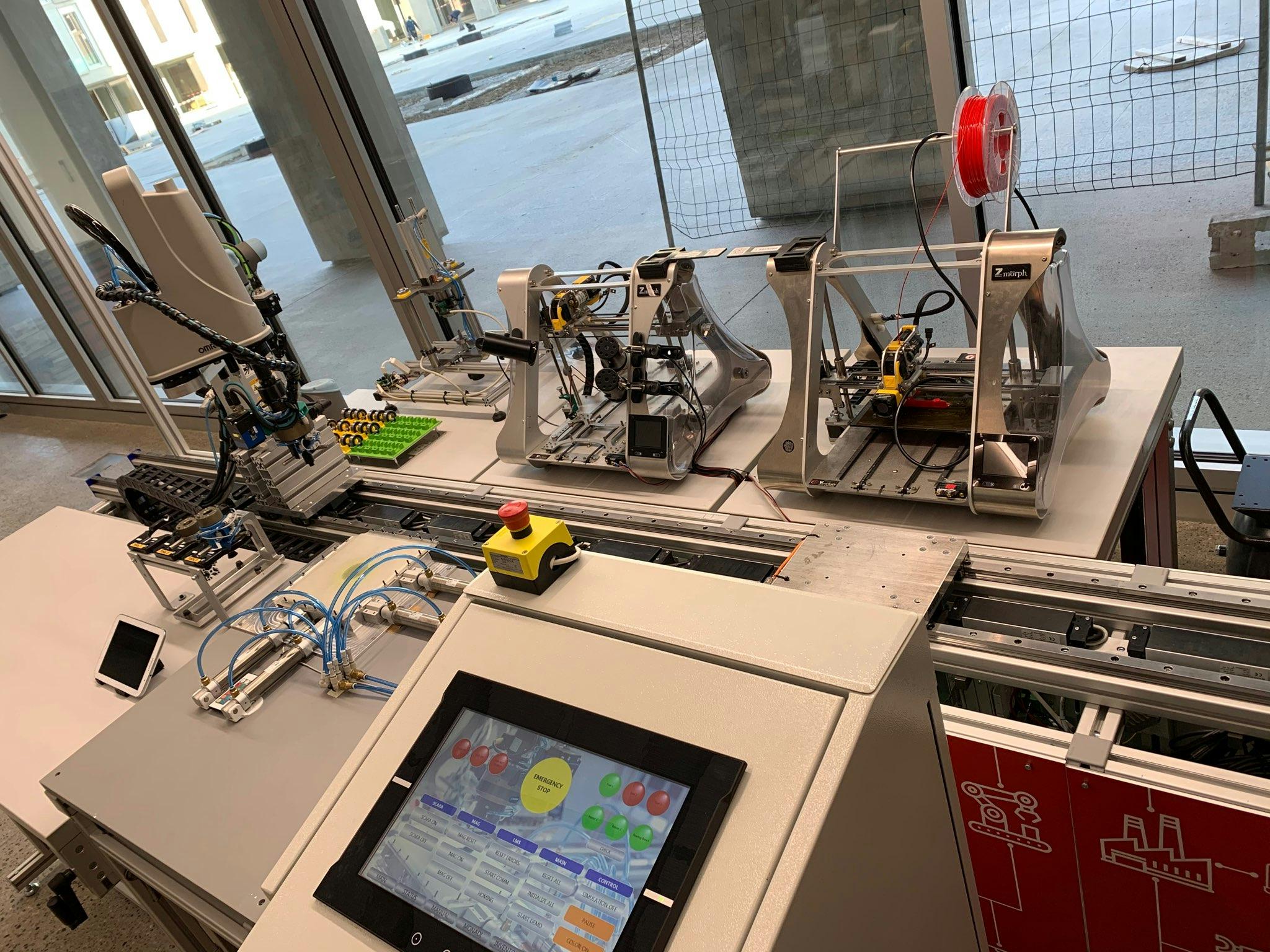
Production modules
1 to 5 production modules can be aligned on one side of the 4 meters long transport system. The current configuration consists of two 3D printers (that manufacture the tans and the plastic boxes) and one engraver (that personalizes the covers).
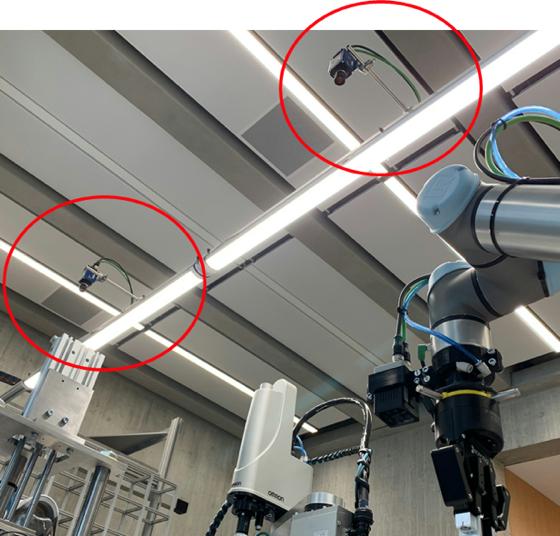
Modules camera
An array of cameras (Wenglor Weqube B50M110) identifies the production modules functionality and relative position, in order to inform the system about the production options available and automatically compensate for detected deviations from the nominal relative positions.
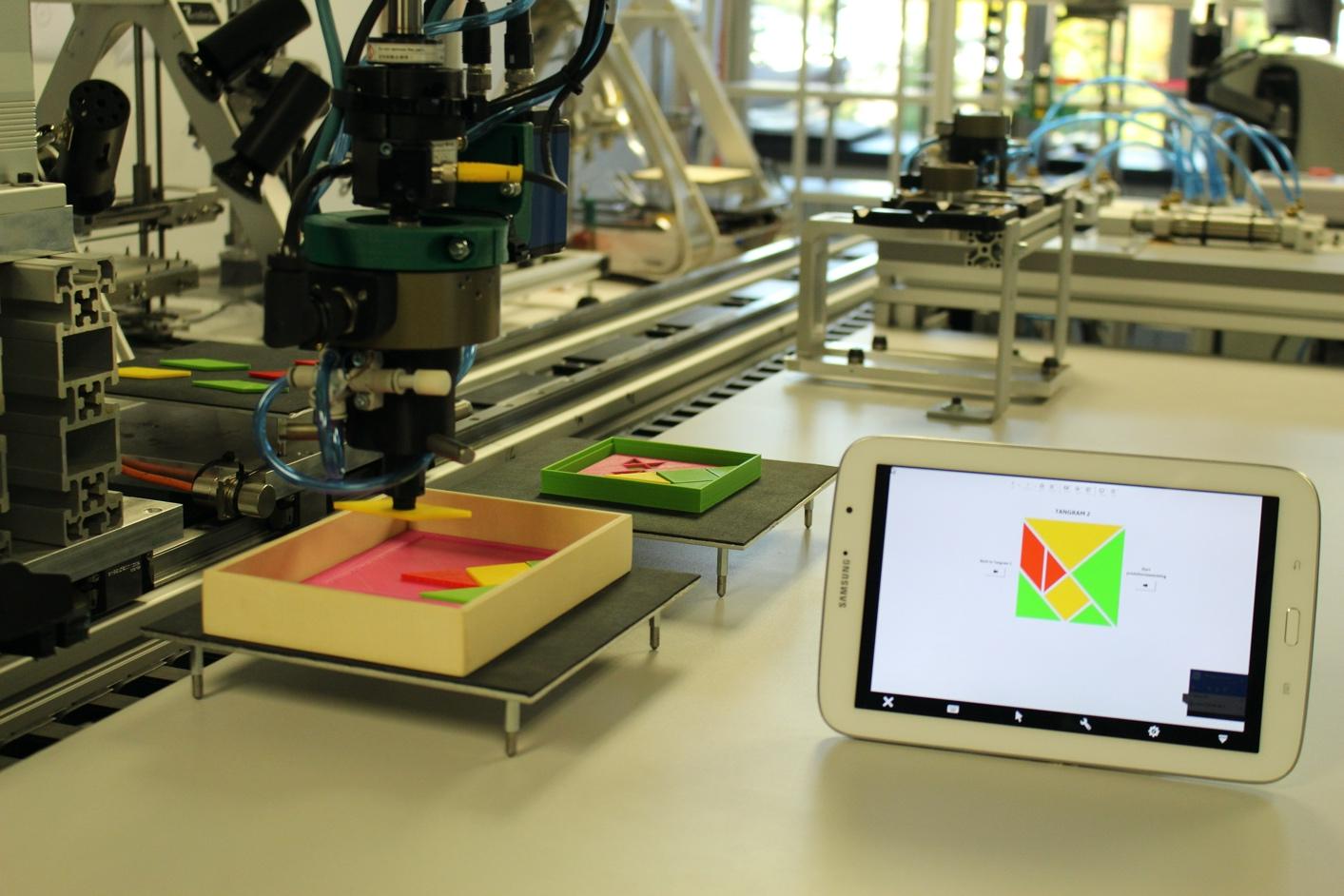
Assembly station
Facing the production modules, on the other side of the linear motor system, an assembly table can host up to 3 pallets at the same time to allow assembly operations. The tool-head warehouse is positioned here as well.
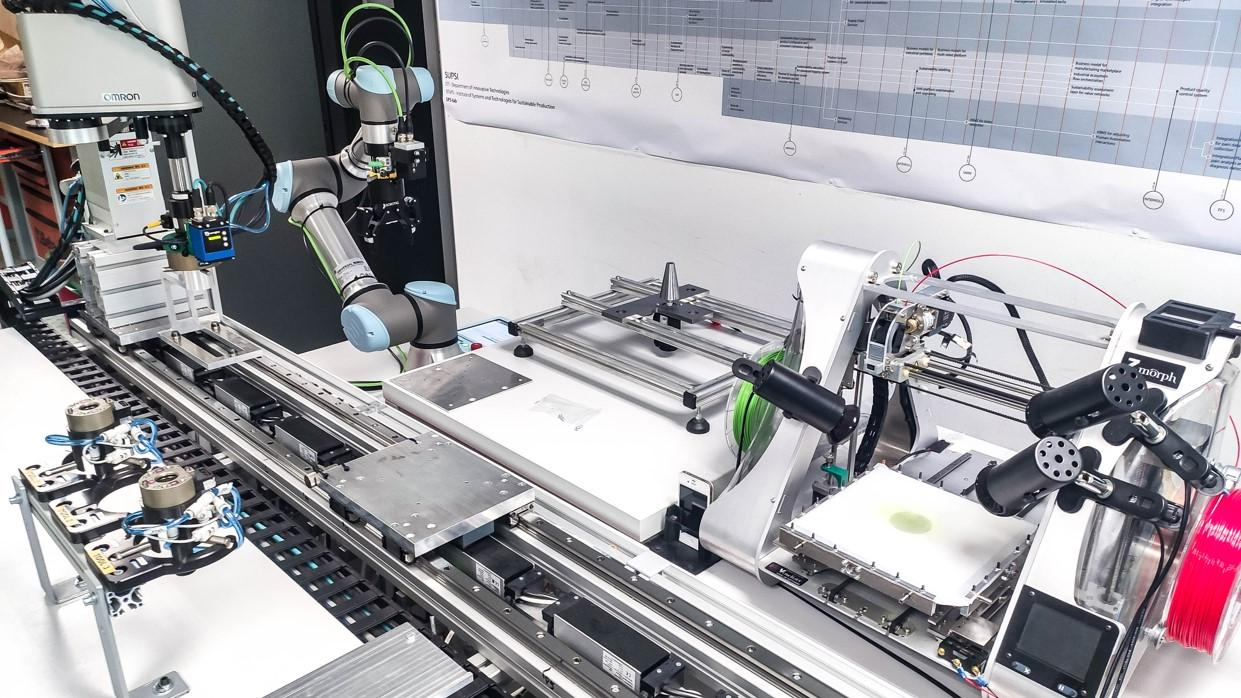
Human-robot collaborative station
This working station, equipped with a UR Cobot (Universal Robots UR5e), represents an alternative way to assembly the tangram game-set.
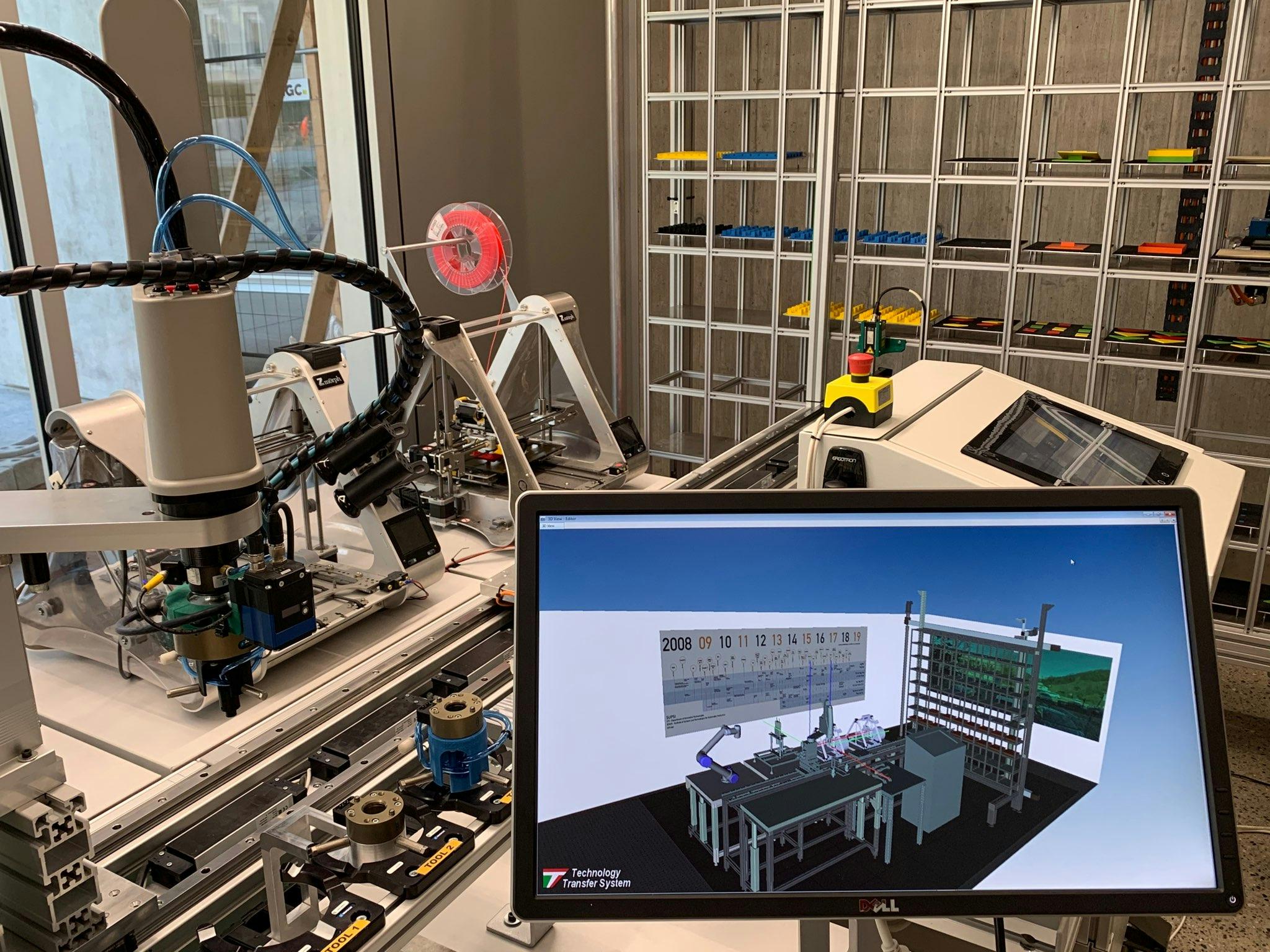
Digital Twin
The physical Mini-Factory is associated to an evolving digital profile, based on constant synchronization through IoT devices: the Mini-Factory digital twin. The Mini-Factory digital twin is based on massive, cumulative, real-time, real-world data (through OPC-UA protocol).
Collaborative Robotics
In our Factory, a work cell has been developed to advance new collaborative robotics applications. This cell is equipped with an ABB Gofa, a 2 Universal Robots UR5e, and an Igus Rebel, along with various end-effectors, vision systems, and two workbenches—one fixed and one mobile. Moreover, we use RoboDK for simulation and offline programming of collaborative robots combined with AI and smart control systems to make human-robot collaborative applications.


Latest Post
SUPSI coffee mug
The SUPSI coffee mug is characterized by a traditional mug design consisting in a ceramic glass coated with SUPSI brand colours, a plastic mould-injected cover with a 3D printed/wood laser cut personalization glued on top of it and two coloured silicone seals.
Read moreSUPSI Mini-Factory for research, education, and training
Abstract The manufacturing industry constantly faces complex challenges: unpredictable events, fierce competition, shorter product life-cycles, increased variability and fluctuating demand are just a short-list.
Read moreThree-layers technological architecture
Within an IIOT solution, three layers can be clearly identified, 1-Hardware, 2-Communication and 3-Software. The hardware layer is composed by Sensors, Actuators, Control HW and Communication HW: it represents the physical layer that can sense and collect data, and that can affect a change in the environment.
Read moreContact Us
Contact Details
The Laboratory of Sustainable Production Systems (SPS Lab) is dedicated to research and education activities aimed at the development and use of methods and tools for the design, analysis and management of products, processes and production systems.
ISTePS - Polo universitario Lugano - Campus Est, Via la Santa 1
Phone: +41 (0)58 666 66 79
Email: matteo.confalonieri@supsi.ch